


OBJECTIVE:
PROBLEM:
TARGET:
INSIGHT:
STRATEGY:
The majority of players engage with the free daily puzzles, but feel little urgency to upgrade.
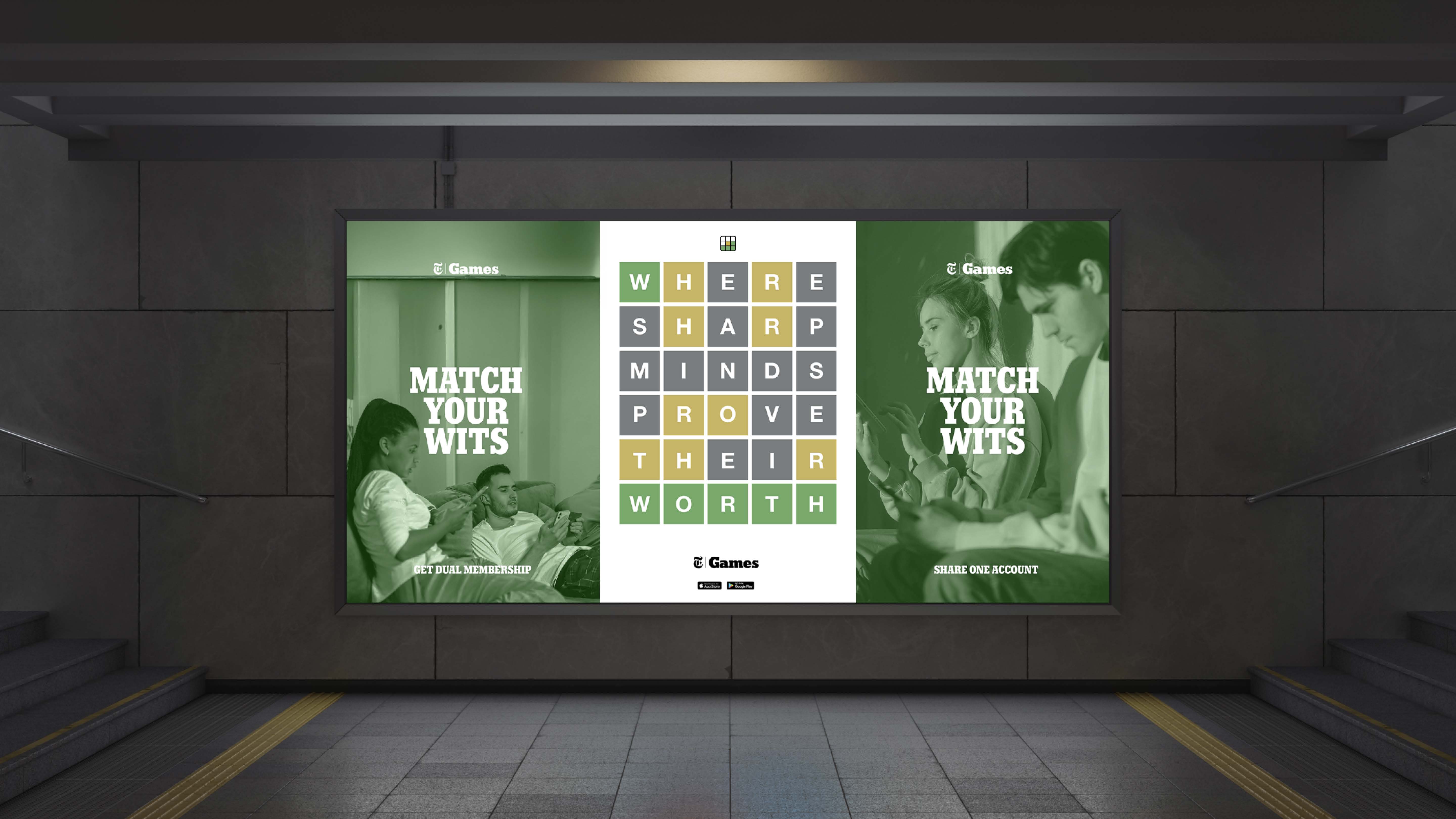
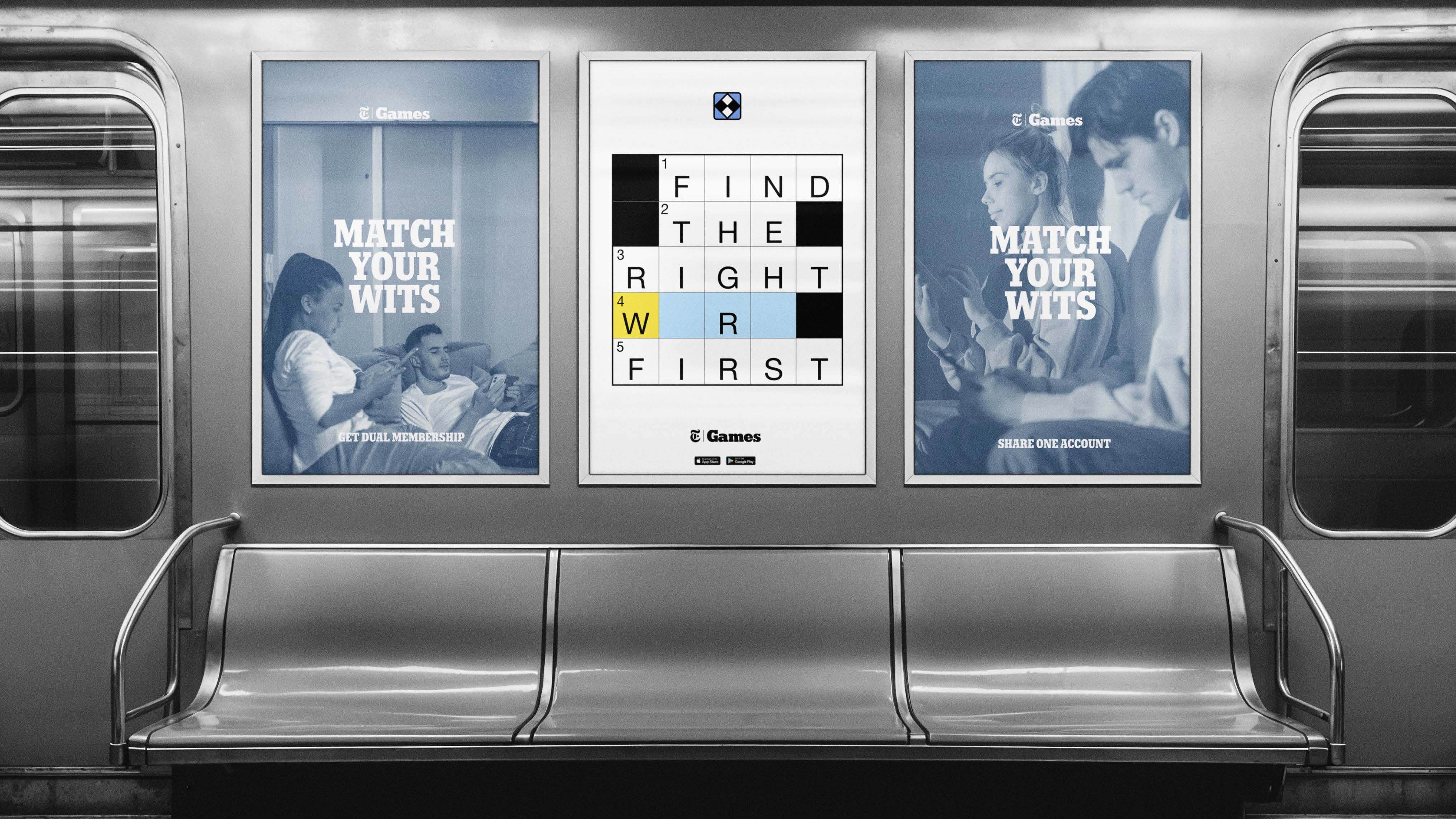
At the same time, a behavioral pattern emerged among users: many players race friends, partners, or family members to complete the daily puzzle first.
The challenge became clear: How do we turn a habit people do alone into a reason to subscribe together?

Our research began with a broader cultural observation. Despite being more digitally connected than ever, people report feeling increasingly isolated.
Research from the CDC found that 24.1% of U.S. adults report lacking social and emotional support.




While social media promises connection, much of it lacks depth. What people increasingly crave are genuine interactions rooted in shared curiosity and conversation.
Using MRI-Simmons data, we focused on 18–24-year-old players, who show strong engagement with both puzzles and digital games.
Young singles index 147 above average in the dataset
Puzzle and game engagement indexes 154
Playing video games 2+ times per week indexes 153
Strong sensitivity to brand and social influence factors (123–159 range)

Studies from Harvard and the NIH show that talking with friends and family is one of the most effective ways to combat loneliness.
But the most meaningful conversations often begin with something intellectual to engage with together with a question, a challenge, or a puzzle.
Just as other video games, The New York Times Games has accidentally become a modern third space.
Players don’t just solve puzzles.
They text their partner their Wordle score.
They compete with their parents over the crossword.
They debate clues with friends.
The games have become a daily ritual that sustains relationships through intellectual play.

Instead of positioning the product as a solo brain workout, we reframed it as something far more valuable:
A shared ritual that strengthens relationships.
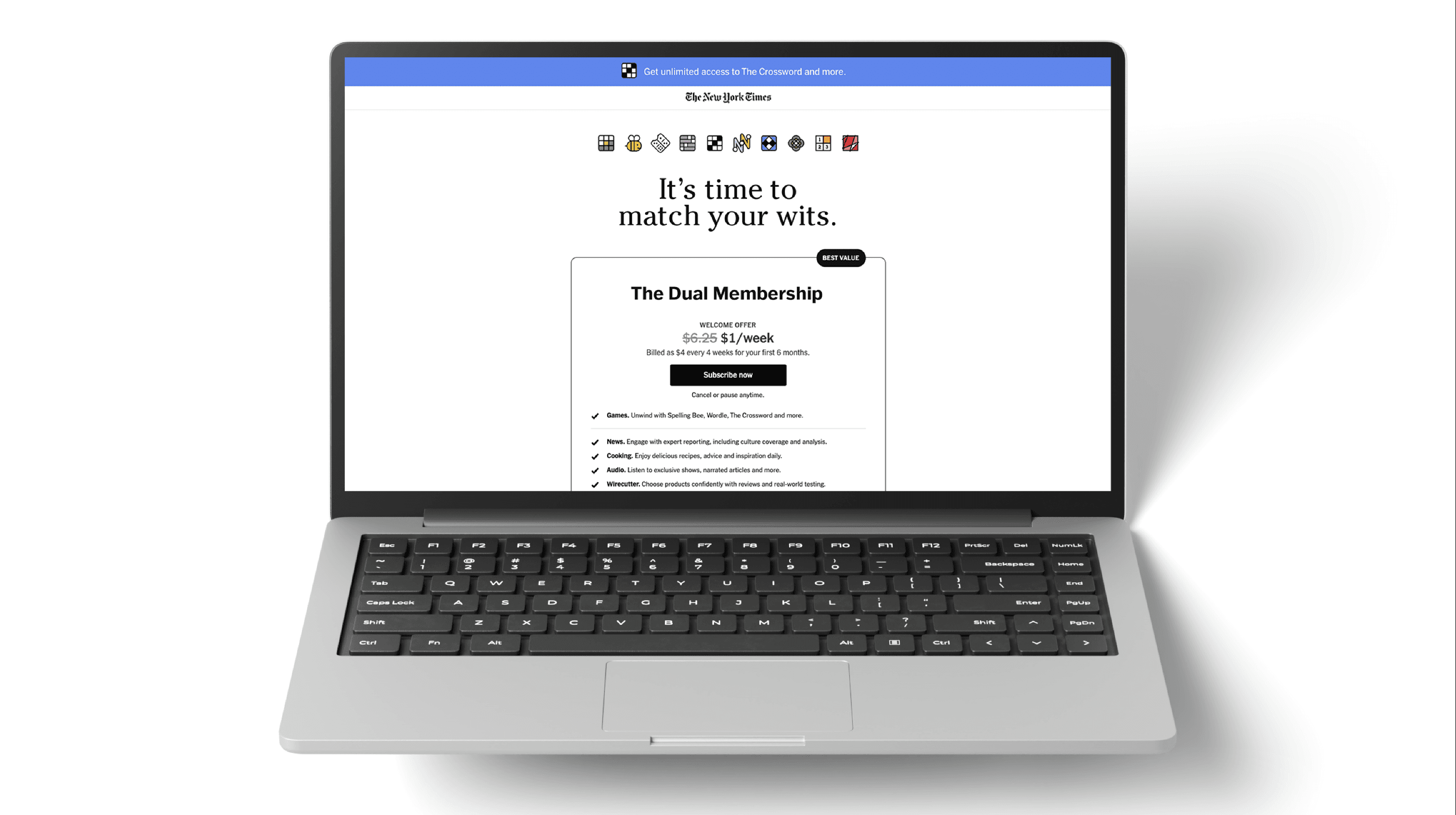
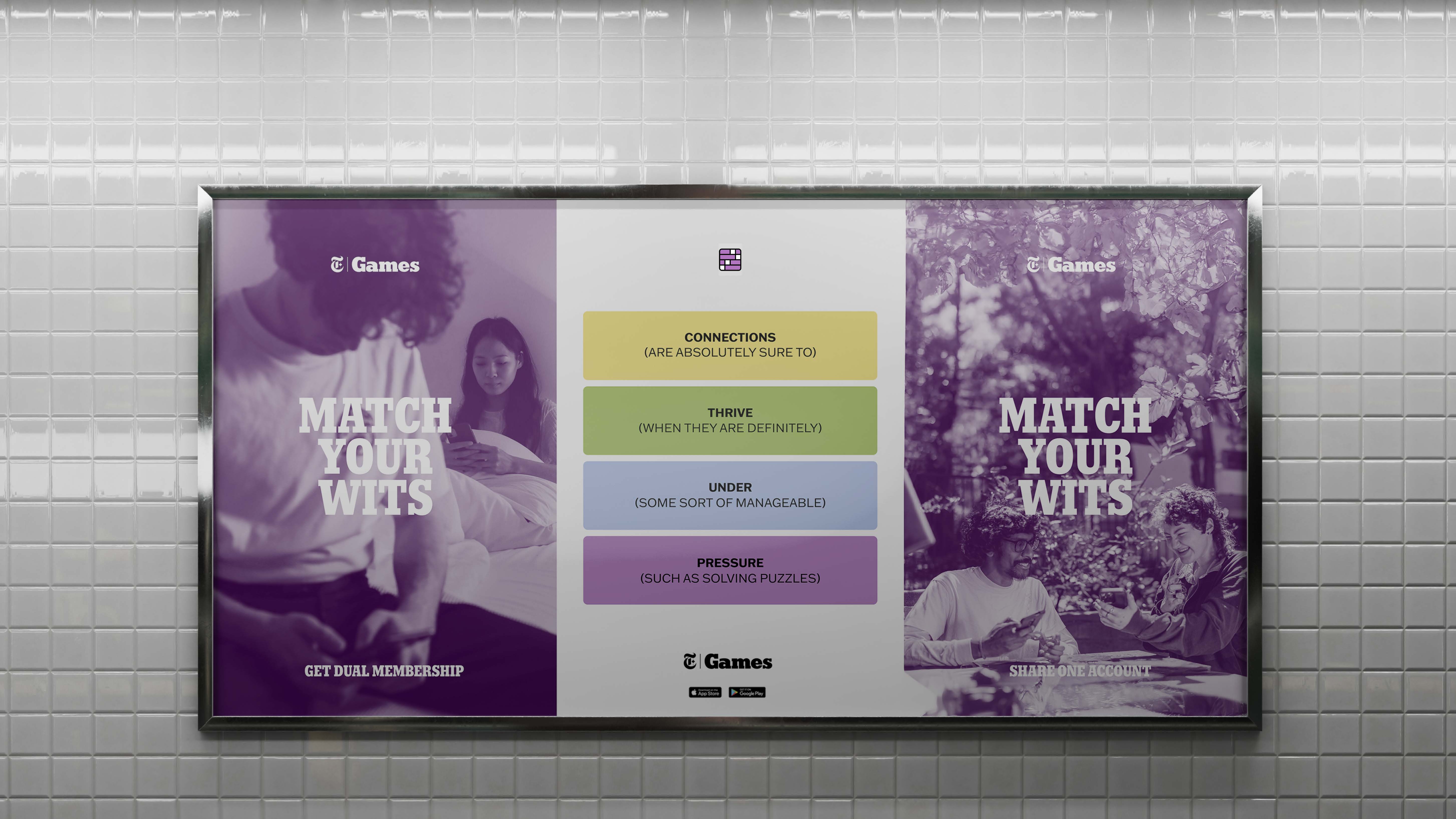
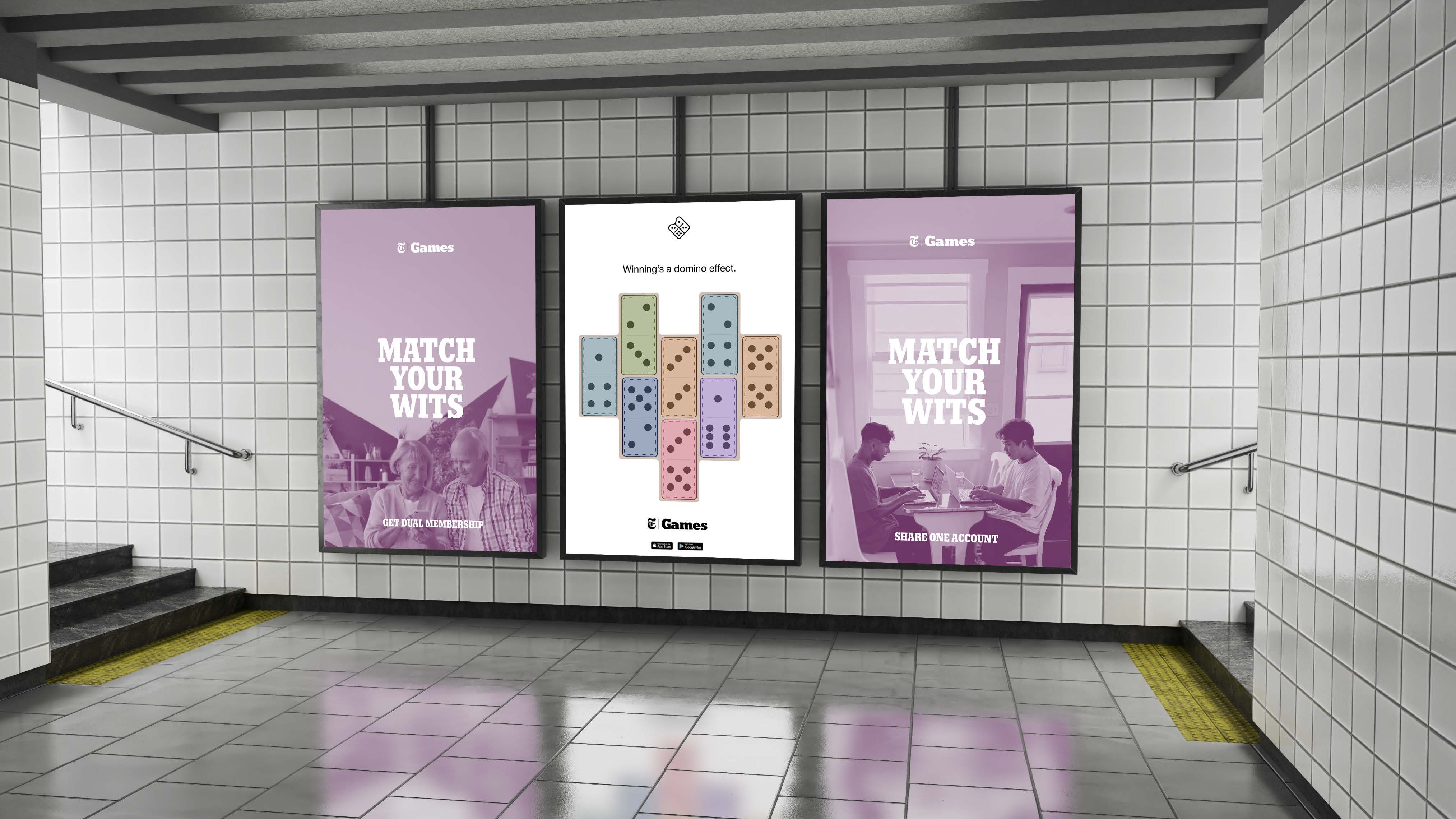
The strategy focused on encouraging people to experience the games together, transforming an individual habit into a shared subscription behavior.
If people already race their loved ones to play the game first, the next step is obvious:
Give them a way to play—and subscribe—together.

NYT Games Team
AD: John Marenic
AD: Logan Murray
CW: Sandra Sanchez
ST: John Romanelli